
In 2024, more than 40% of early-stage startups that grew too fast failed. They looked strong from the outside. But inside, they were weak.
Many investors love fast growth. It looks exciting. It feels like success. Though not all growth is beneficial. Faster success hides problems sometimes. It occurs issues to faulty products, bad data, or fraudulent services.
This is where AI due diligence comes in. It assists portfolio managers in seeing the truth behind the data. It seems to be deeper and quicker than the traditional process.
In the past, checking a company’s health took weeks or months. It was done by people reading reports and spreadsheets. Now, AI can scan thousands of data points in minutes. It finds patterns that humans may miss.
Portfolio Managers can use these data signals to make safer and smarter choices. They can spot red flags early. They can stop funding bad growth before it becomes a disaster.
In this blog, you will learn how a portfolio manager can use Data Signals. You will also see how to use them to stop early growth to guide better investment decision-making.
Why Portfolio Managers Should Worry About Early Growth
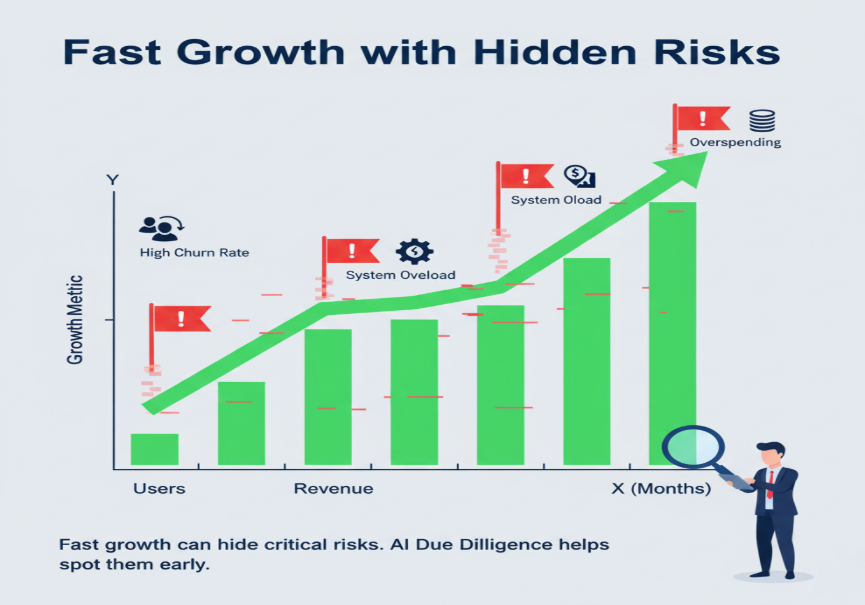
Early growth looks great on paper. A company adds users fast. Sales rise every week. The company gets excited. But that can hide a big issue.
Early-market growth risk occurs when a company grows faster, but it can’t keep up. It may not have the perfect data systems, groups, or customer service. It can burn money very fast.
Investors always want growth at all costs. They invest heavily, spend money on advertising, and avoid real value. Investors see the top-line numbers but miss the warning signs.
Portfolio Managers have a hard job. They have to tell the company between healthy growth and dangerous simulation. They must understand when to keep investing and when to stop.
This is why AI-driven due diligence matters. It gives managers real-time insight. It keeps watch after the deal is done. It warns them when things start to go wrong.
What Is AI Due Diligence?
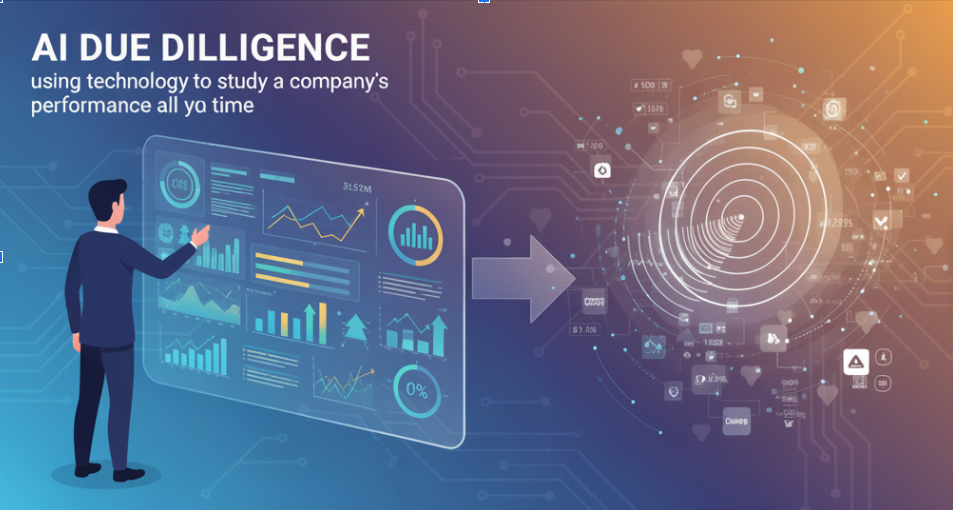
AI Due Diligence means using technology to study a company’s performance all the time. It’s not just once before investing.
Traditional due diligence is slow. It uses manual checks and static reports. Once done, it may already be outdated.
AI changes this. Here are three key strengths:
- Speed: It scans and processes large amounts of data instantly.
- Depth: It connects financial, customer, and market data to find patterns.
- Continuity: It updates in real time, giving constant alerts when something changes.
Imagine a company growing fast because it gives deep discounts. Seemingly, sales are growing. But AI finds an issue. Most new customers leave after one purchase. It flags this as a risk signal.
This is how AI Due Diligence helps. It shows what is real and what is temporary. It supports clear, data-based investment decisions.
Managers no longer have to guess. They can see the story the numbers are telling and act before problems grow.
The Role of Data Signals in Investment
Data signals are small clues hidden in company data. They show changes in performance, either good or bad.
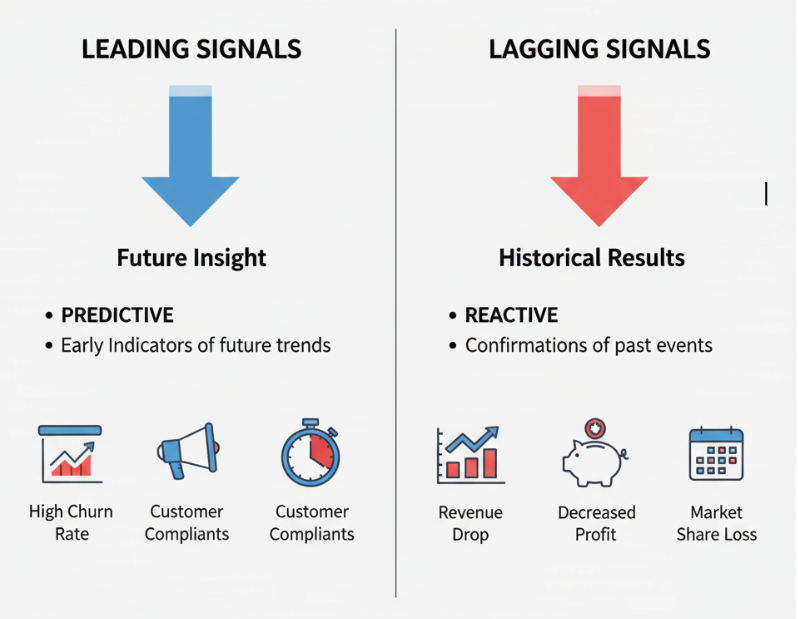
There are two kinds of signals:
- Leading signals: Predict what might happen next.
- Lagging signals: Confirm what has already happened.
Some key data signals include:
- Falling customer retention rates.
- Rising cost per new user.
- Negative customer reviews or social sentiment.
- Late payments or a sudden drop in revenue.
- Unusual spending or hiring patterns.
These signals help Portfolio Managers see risk before it hits the bottom line.
For example, if customer churn rises before revenue drops, that is a leading signal. The manager can act fast, adjust strategy, hold funds, or ask questions.
Using data signals means no more surprises. Growth can be tracked in real time. Decisions can be made with facts, not feelings.
How Portfolio Managers Use Data Signals
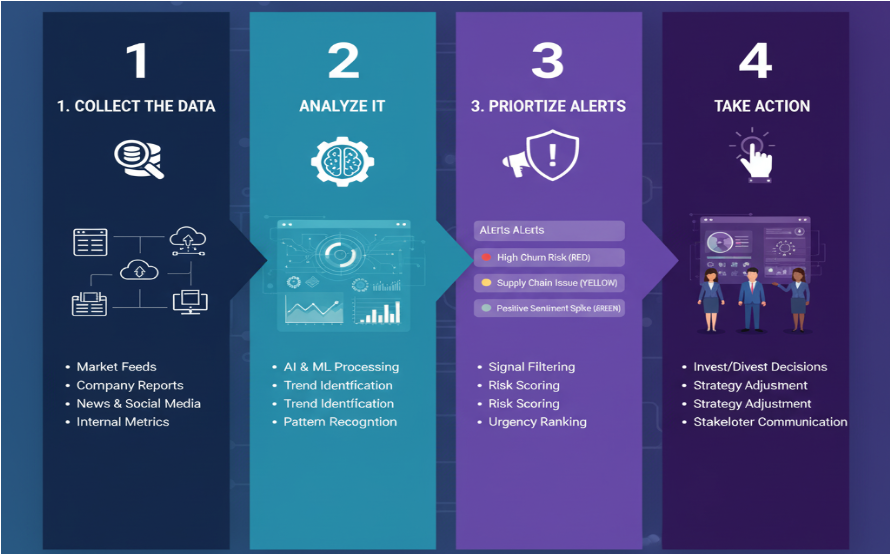
Let’s look at how Portfolio Managers can use data signals day to day.
- Prioritize Alerts: Not every signal matters. The system highlights the most urgent ones.
- Take Action: The manager decides whether to pause funding, change the plan, or exit. Many firms now use a Growth Health Dashboard. It shows the “health score” of each company. It combines financial, customer, and market data into one simple view.
Here’s an example:
A startup shows 200% monthly growth. Everyone is happy. But the dashboard shows two warning signals: falling retention and fake user accounts. The manager investigates. They stop the next funding round. The company later admits it inflated numbers. Early action saved millions.
This is the power of AI Due Diligence. It helps managers make calm, clear, and disciplined choices.
Good investing is not about chasing growth. It is about understanding it.
How Portfolio Managers Build an AI Due Diligence Framework to Stop Early Growth
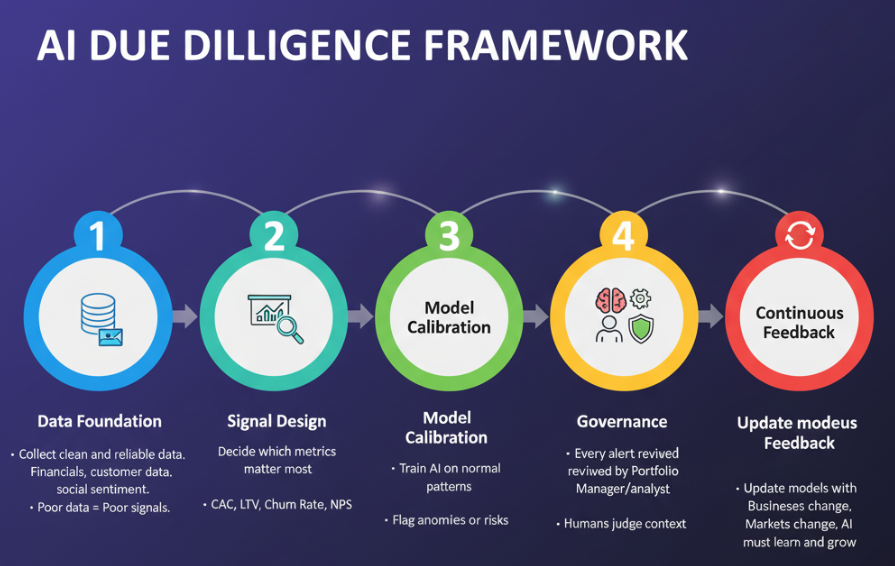
A smart framework helps Portfolio Managers use AI Due Diligence well. Here’s how to build one. Start by collecting clean and reliable data. Include financial numbers, customer data, and even social sentiment. Poor data means poor signals.
Step 2: Signal Design
Decide which metrics matter most. Focus on early growth markers like:
- Customer acquisition cost (CAC)
- Lifetime value (LTV)
- Churn rate
- Net Promoter Score (NPS)
Step 3: Model Calibration
Train the AI models to understand normal patterns. Then, set them to flag anything that looks odd or risky.
Step 4: Governance
Keep humans in charge. Every alert should be reviewed by a Portfolio Manager or analyst. Machines find patterns, but humans judge context.
Step 5: Continuous Feedback
Keep updating models with new data. Businesses change. Markets change. Your AI must learn and grow, too.
Use tools like analytics dashboards or APIs to make this smooth. Remember: AI Due Diligence is not a one-time project. It is a living system that gets smarter over time.
The Benefits of Portfolio Managers Using AI Due Diligence
AI is powerful, but it does not replace people. It helps them. Portfolio Managers still make the final call. They ask “why?” when a signal looks odd. They bring judgment and experience.
Think of AI as a radar. It scans the sky and spots trouble. The Portfolio Manager still decides what to do next. This is called human-in-the-loop due diligence. It means humans and AI work side by side.
As one investor said, “AI finds the patterns. Humans find the purpose.”
This mix builds trust. It makes investment decisions stronger and more balanced.
Top Errors Portfolio Managers Make and How to Fix Them
Even with good tools, mistakes happen. Here are a few to avoid:
Mistakes:
- Trusting AI results without checking them.
- Using incomplete or incorrect data.
- Ignoring human factors like leadership quality.
Best Practices:
- Start small and expand slowly.
- Review your models often.
- Keep your investors informed and transparent.
- Combine data from money, operations, and people.
These steps make AI Due Diligence more accurate and trustworthy.
The Future of AI Due Diligence and Smart Growth
The world of investing is changing fast. AI Due Diligence will be everywhere in the future.
We will see tools that write due diligence reports automatically. The AI process will detail its plans clearly so humans can trust it.
Portfolio Managers will use live dashboards to monitor every company’s risk and success. Predictive systems will warn them before problems start.
The next wave of investing will not only measure growth, but it will also understand it. The focus will shift from speed to quality growth.
The most successful investors will be those who effectively blend data, AI, and human judgment. They will grow faster, safer, and with confidence.
Conclusion:
AI Due Diligence gives Portfolio Managers a clear edge. It helps them see beyond surface-level numbers.
By using data signals, they can predict problems early. They can act before losses happen.
The result is steady, healthy investment growth, not risky expansion.
Start now. Bring AI into your process. Use data wisely. Because in investing, insight matters more than timing.
FAQ
AI Due Diligence is the use of smart tools to study a company’s data all the time. It checks how a business is really doing, not just what it says in reports. This helps Portfolio Managers make faster, smarter, and safer choices.
Data signals show early signs of change. If customers stop coming back or costs rise fast, these signals appear first. They help managers act early and avoid risk.
No. It supports them. AI can find patterns, but people understand context. Managers still make the final call.
Fast growth can be fake. It can hide problems like poor retention or overspending. Stopping it early saves time, money, and reputation.
Start small. Use the data you already have. Work with tools that show simple signals. Test them, learn, and grow from there.